
The property that I own is a 17.5-acre rural plot. While there is an on-grid power line at the road, our build site is about 1,400 feet from the road.
To power the house and site, we opted to install a solar system rather than spend $50–100k installing poles in the Canadian Shield bedrock.
This page documents the system, its energy output, and what we have learned from living with it. The setup has been an ongoing lesson in sizing, storage, panel placement, and the compromises of keeping batteries alive through a northern winter.
Generation and use
Loading weekly readings…
Weeks with little or no generation or usage are periods when the property was unoccupied.
Upcoming
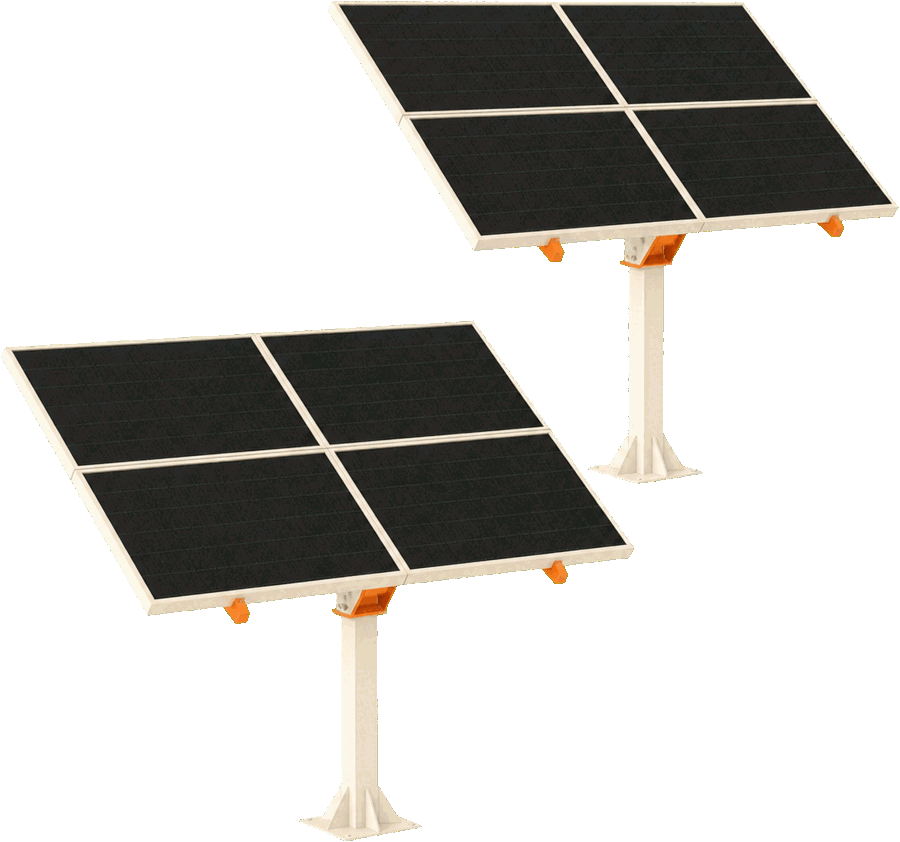
Solar Extension
A permanent eight-panel array and new battery system for the house build.
Experiment log
Learnings
01 · System sizing
Change
We chose a larger, more expensive system instead of a smaller, cheaper one. I thought it would last longer and be a better system to learn from.
Learning
It is definitely a better system, but it is probably bigger than we need. We may have to replace it for the house build anyway because the certifications and regulations have changed.
02 · Battery expansion
Change
The original battery bank was running down far too quickly, so we added more batteries. It cost a lot of money.
Learning
We can now get multiple days of use from the batteries. Battery technology has improved drastically in the last three to five years. I wish we could use the batteries available now instead of the ones tied to this system.
03 · Panel expansion
Change
We bought one solar panel even though the charge controller could handle four. The plan was to add three more later.
Learning
Solar panels change constantly, and different models do not work well together. We ended up buying four new panels and a cheaper charge controller for the original panel. Otherwise, we would have lost some of its output.
04 · Panel relocation
Change
The original panel placement was dictated by the site layout and the restrictions we had. We have since moved them to a steeper angle, probably between 25 and 35 degrees.
Learning
Moving the panels by about 30 degrees roughly doubled our energy generation.
05 · Panel cleaning
Change
We noticed a change while cleaning the solar panels.
Learning
Clean panels produce about 30 percent more solar energy.
06 · Winter battery storage
Change
Battery storage is difficult in winter. LiFePO4 batteries can be damaged if they charge below freezing, so ours have built-in heaters to prevent that.
Learning
The heaters are inefficient and can negate the benefit of having a battery at all since they use so much power. Keeping them above freezing while off-grid is also difficult because heat takes a lot of energy. It is a catch-22.
Conversation
Add a note.
Questions, corrections, and useful tangents are welcome. Sign in to join the conversation.